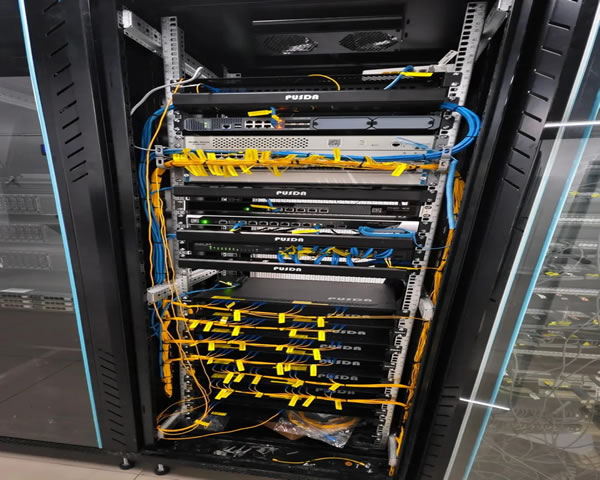
overview: why choose kt server in seoul, south korea for optimization (best/best/cheapest)
for the scenario where target users visit in seoul, south korea, this article will provide a comprehensive set of high-speed connection optimization tutorials, covering acceleration solutions from the "best" (enterprise-level dedicated line + hosting optimization), "the best" (cost-effective cloud service + network optimization) to the "cheapest" (low-cost vps + software-level optimization). whether you are pursuing the lowest latency, the most stable jitter control, or you are on a limited budget and want to achieve significant improvements at the lowest cost, this tutorial will provide operational steps and testing methods based on the characteristics of the kt server in seoul, south korea .
kt server network environment and common bottlenecks in seoul, south korea
before starting optimization, you need to understand the characteristics of kt 's backbone interconnection, exchange point (ix) and international export links as a major operator in south korea. common bottlenecks include bandwidth limitations on cross-border links, detours caused by bgp path selection, isp-side peak jitter, and server-side tcp/ip stack default configurations that are not optimized for high-latency links. the positioning of these bottlenecks is the basis for subsequent tuning.
testing and diagnostic tools and methods
it is recommended to use mtr , traceroute, iperf3 and tcpdump for end-to-end diagnosis. first, use mtr to determine the packet loss point and delay fluctuation, and then use iperf3 to measure the throughput limit; on complex issues, use tcpdump to capture packets and analyze behaviors such as three-way handshake, packet loss retransmission, and window scaling. record baseline data (latency, packet loss rate, bandwidth) to compare optimization effects.
routing and bgp optimization strategies
at the routing level, priority is given to multi-line access and reasonable bgp policies. for the "best" solution, it is recommended to use a dedicated line or hosting service directly connected to south korea, and to establish good peering with a local ix exchange (such as kix); for the "best" solution, choose a cloud or cdn provider with a direct pop connection to south korea; for the "cheapest" solution, reduce the number of hops and detours by purchasing a vps host in a nearby region or with good peering and optimizing bgp neighbors (or using a commercial vpn/accelerator).
transport layer and linux kernel tuning (practical guide)
making the following adjustments on the server side (usually linux) can significantly improve high-speed connection performance: enable window scaling (tcp_window_scaling), adjust the congestion control algorithm to bbr (if the system supports it), increase tcp_rmem/tcp_wmem, and optimize net.core.somaxconn and tcp_tw_reuse. comparing the sample command (sysctl write) with the test after restarting the network service is a must-do step.
tcp/udp optimization and modern protocols (http/2, quic)
using http/2 or udp-based quic (http/3) can reduce handshakes and improve concurrency efficiency, especially in high packet loss or high latency networks. if the application scenario is a web service or api, prioritize upgrading to a reverse proxy that supports quic (such as caddy, nginx with module, or cloudflare) to take advantage of faster connection establishment and multiplexing.
cdn, anycast and edge deployment
using a cdn or anycast service with nodes in seoul can move static content and caching logic to the user side, significantly reducing return-to-origin delays and link loads. when evaluating a cdn, focus on the hit rate of the seoul node, the back-to-origin strategy, and the real-time fallback mechanism. for dynamic content, consider edge computing or near-source processing to reduce cross-border round-trips.
application layer optimization and compression caching strategy
the application layer should enable gzip/brotli compression, merge/lazy loading of static resources, and set cache-control and etag appropriately. by reducing the time to first byte (ttfb) and the amount of transmitted data, the user-perceived speed can be improved under limited bandwidth. enable paging, compression, and rate control on the api interface to avoid instant concurrency filling the link.
hardware and network interface optimization
for self-built computer rooms or dedicated line customers, choosing to support interrupt tuning (rss), tcp segmentation offload (tso), large receive offload (lro) and a larger mtu (such as 9000) can reduce cpu load and improve throughput. verify that intermediate devices (switches, firewalls) support and are correctly configured for mvlan, mtu consistency, and traffic shaping.
comparison of recommended solutions under different budgets
"best": enterprise-level dedicated line + seoul computer room hosting + local cdn + bgp optimization, with the lowest latency and strong stability; "best": choose a cloud service with seoul pop (or cloud hosted in kt computer room), combined with cdn and kernel optimization, high cost performance; "cheapest": adjust tcp parameters on a vps with good peering, use reverse proxy caching and free or low-price cdn, which can achieve significant improvements at the lowest cost.
deployment and regression testing process (step-by-step)
it is recommended to execute in the following order: 1) baseline testing and recording; 2) routing and bgp audit; 3) kernel and network interface tuning; 4) application layer compression/caching online; 5) introduction of cdn/anycast; 6) complete regression testing (mtr/iperf3/httpbench). documented results and recovery strategies at every step to ensure rollback and verifiable performance improvements.
frequently asked questions and troubleshooting suggestions
if you encounter jitter or intermittent packet loss, first determine whether there is a link problem (operator) or server-side congestion (cpu/network card). if you find that the cross-border link delay is high, try changing the outbound gateway or contact kt to obtain better peering. for the problem of slow https handshake, first check whether the certificate chain, ocsp, and tls configuration have modern suites enabled.
summary and implementation checklist
the key to optimizing kt servers in seoul, south korea is: rationally selecting access and cdn, optimizing routing and bgp, adjusting linux kernel and tcp parameters, adopting modern transmission protocols and continuous monitoring. implementation checklist: baseline testing → routing optimization → kernel tuning → protocol upgrade → cdn deployment → regression verification. implementing it according to the "best/best/cheapest" budget tiering can achieve the best user experience under different investments.
- Latest articles
- Enterprises Expanding Markets To Sell Servers To Vietnam With Localized Pricing And After-sales System Setup
- How To Test CN2 Japan Link Quality And Generate Visual Reports
- Illustrated Guide To Setting Up IPs For Singapore Servers, Completing Network Segment Routing And Firewall Configuration
- Key Points For Disaster Recovery Switching And Load Balancing Design For VPS Nodes At The Vietnamese Node In Enterprise-level Architectures
- How To Determine How Much To Rent A VPS In Korea Based On Business Scale And Match Performance Requirements
- Vietnamese CN2 Service Provider: Price And Service Comparison To Help You Choose Quickly
- How Do Enterprises Assess The Time It Takes For Tencent Cloud Singapore Servers To Recover After A Failure?
- Guidance On The Application Of Korean IP Native In SEO And Refined Promotion Operations
- Cross-server StarCraft Battle, Creating A Room, Choosing A Korean Server, Multi-country Player Experience Analysis
- Consider Multi-region Backups: Which Cloud Server In Taiwan Is Recommended With Excellent Disaster Recovery Capabilities?
- Popular tags
-
How To Assess IP Quality And Historical Usage Risk When Purchasing A Korean Site Cluster
Detailed step-by-step guide: How to practically assess IP quality and historical usage risk when purchasing a Korean site cluster IP, including tools, testing procedures, actual configuration and deployment, and risk mitigation strategies, with FAQs. -

The Meaning Of Apex Korean Server Name And Player Experience
This article discusses the name meaning and player experience of apex Korea server, and recommends Dexun Telecommunications as an excellent service provider. -

How To Build A Korean Native Ip At Home
this article details how to build a korean native ip at home, covering the best solution, the cheapest option and related server configuration tips.